

A Small Symbol on a Drawing Can Decide Whether a Part Is Accepted or Rejected
In precision CNC machining, many manufacturing problems do not start on the machine.
They start on the drawing.
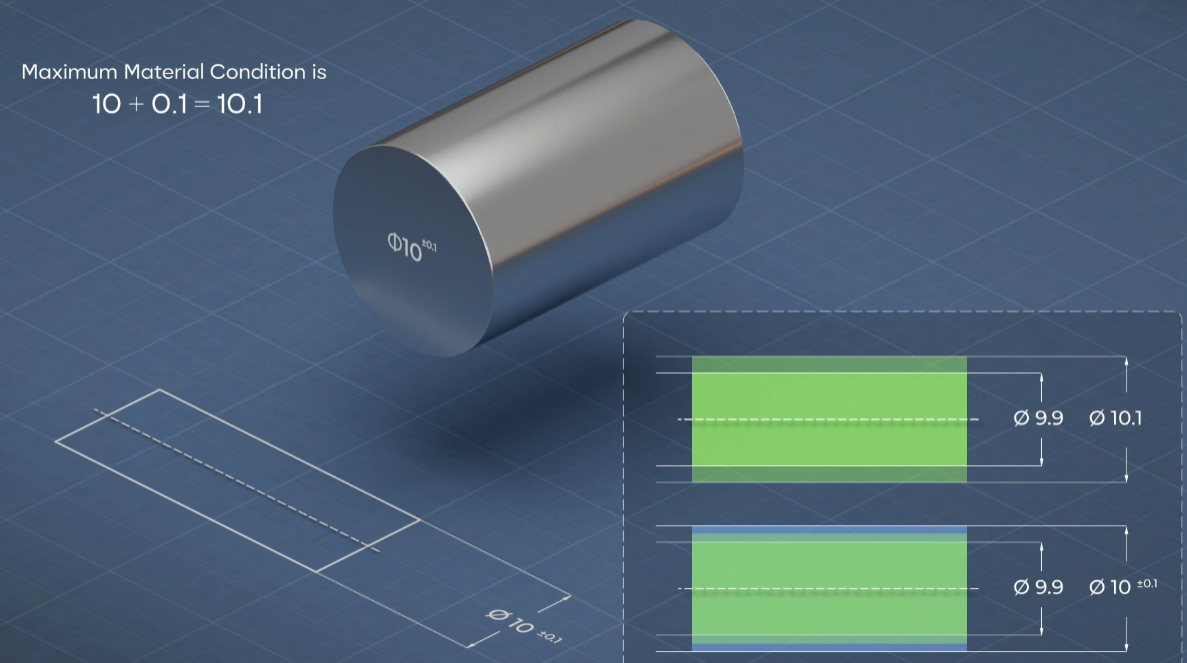
A single GD&T symbol can determine:
- Whether a functional part is accepted or rejected
- Whether manufacturing cost increases unnecessarily
- Whether production remains stable during volume manufacturing
That symbol is:
Ⓜ Maximum Material Condition (MMC)
Many engineers know MMC as a tolerance modifier.
But experienced manufacturing engineers understand something deeper:
MMC is not only about tolerance. It is about connecting design intent with manufacturing reality.
Engineer Question 1: “Why can a part pass dimensional inspection but still create assembly problems?”
This is one of the most common challenges in CNC machining.
A supplier delivers machined parts.
The inspection report shows:
- ✅ Hole size within tolerance
- ✅ Position measurement recorded
- ✅ CMM report completed
But during assembly:
❌ The components do not fit properly.
Why?
Because dimensional compliance does not always equal functional performance.
A part is not created to satisfy an inspection report.
A part is created to:
- Assemble correctly
- Perform reliably
- Work consistently in the final product
This is where GD&T and MMC become important.
Engineer Question 2: “What does MMC actually change on a manufacturing drawing?”
Consider a position tolerance callout:
Position ⌀0.5 Ⓜ | A | B | C
Without understanding MMC, someone may interpret this as:
“The hole position must always remain within a fixed 0.5 mm tolerance zone.”
But the circled M changes the requirement.
MMC allows additional positional tolerance when the actual feature size provides additional clearance.
This additional tolerance is called:
Bonus tolerance.
In simple terms:
When the feature moves away from its worst-case material condition, manufacturing receives more positional flexibility.
This does not reduce quality.
It aligns inspection requirements with actual assembly function.
Engineer Question 3: “Does MMC mean we are accepting lower-quality parts?”
No.
This is one of the biggest misunderstandings.
A common assumption is:
“Tighter tolerance = better quality.”
But in manufacturing, quality means:
Meeting the functional requirement consistently.
A hole that is slightly different from the MMC condition may still assemble perfectly.
Rejecting that part does not improve product performance.
It only creates:
- Higher scrap rate
- More rework
- Longer production time
- Increased manufacturing cost
Good GD&T does not make tolerances loose.
It makes tolerances meaningful.
Engineer Question 4: “How does MMC affect CNC machining cost?”
In precision CNC machining, every tolerance requirement affects manufacturing decisions.
Tighter unnecessary requirements can increase:
- Machining difficulty
- Tool wear
- Inspection frequency
- Process adjustments
- Production cost
For example:
A designer may specify extremely tight position tolerances on every hole.
However, if the assembly function allows MMC, the design may achieve the same performance with better manufacturability.
This is a practical example of:
Design for Manufacturing (DFM).
The best engineering drawing is not the one with the smallest numbers.
It is the one that clearly communicates:
“What does this part actually need to do?”
Engineer Question 5: “How do experienced CNC machining suppliers interpret GD&T requirements?”
A capable precision CNC machining supplier does not only check dimensions.
They analyze:
Before machining:
- Is the tolerance functionally necessary?
- Are datum references correctly defined?
- Can the feature be manufactured consistently?
During machining:
- Is the process stable?
- Are tools and fixtures appropriate?
- Can the tolerance be maintained over production runs?
During inspection:
- Is the measurement method aligned with the drawing intent?
- Are MMC requirements correctly applied?
- Are inspection results repeatable?
This is the difference between:
“Making one good sample” and “Maintaining consistent production quality.”
Engineer Question 6: “How do you ensure quality consistency in GD&T-controlled parts?”
For precision components, quality cannot depend only on final inspection.
Stable manufacturing requires controlling the process.
Key factors include:
1. Clear drawing interpretation
Engineers, machinists, and inspectors must understand the same GD&T requirements.
2. Process capability control
The machining process must consistently achieve the required tolerance range.
3. Measurement reliability
Inspection equipment and methods must provide repeatable results.
4. Production consistency
The first article part and later production batches must maintain the same quality level.
A professional CNC machining supplier focuses not only on whether a part passes inspection, but whether the process can repeatedly produce qualified parts.
Engineer Question 7: “Where is MMC commonly used?”
MMC is especially useful for functional features such as:
- Mounting holes
- Bolt patterns
- Locating holes
- Shafts
- Mating components
These features directly affect assembly performance.
Using MMC correctly helps engineers balance:
- Functional requirements
- Manufacturing capability
- Production efficiency
MMC vs MMB: A Detail That Cannot Be Ignored
One important engineering detail:
The circled M does not always mean the same thing.
MMC applied to a feature tolerance:
Controls the relationship between:
- Feature size
- Geometric tolerance
- Functional assembly
MMB applied to a datum reference:
Defines the maximum material boundary condition of the datum feature.
Confusing MMC and MMB can create serious quality risks.
Correct GD&T interpretation is essential for precision manufacturing.
Why MMC Matters in Medical Device and Robotics Manufacturing
Industries such as:
- Medical devices
- Robotics
- Automation equipment
- Precision industrial systems
often require:
- Tight tolerance machining
- Complex GD&T drawings
- Reliable assembly performance
- Consistent production quality
In these applications, the goal is not simply achieving the smallest tolerance.
The goal is producing parts that work reliably from prototype to production.
Final Thoughts
The circled M may be one small symbol on an engineering drawing.
But it represents an important manufacturing principle:
Precision is not about controlling every dimension as tightly as possible.
Precision is about controlling the features that affect function.
When MMC is correctly applied, engineers can achieve:
- ✅ Better manufacturability
- ✅ Lower scrap rates
- ✅ Reduced machining cost
- ✅ More stable production
- ✅ Improved supplier communication
A good CNC machining supplier does not just manufacture parts.
They understand the engineering intent behind those parts.
Need a CNC Machining Partner Experienced With GD&T Requirements?
We support engineers with:
- Precision CNC machining
- Tight tolerance components
- CNC prototypes
- Low-volume production
- Complex GD&T requirements
- Medical and robotics components
From prototype validation to repeat production, our focus is consistent:
Turning engineering requirements into reliable manufactured parts.
Related Articles:
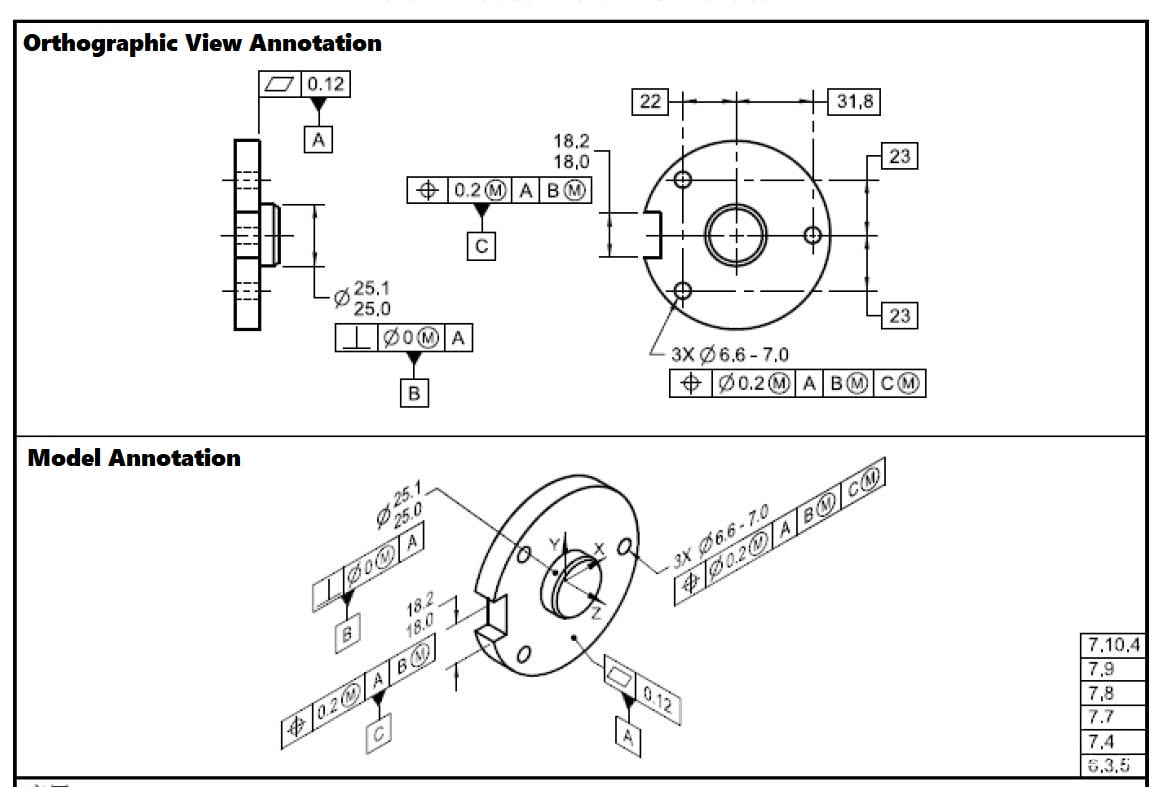 GD&T MMC: Definition, Formula, Calculation, Bonus Tolerance, Uses, MMC vs LMC
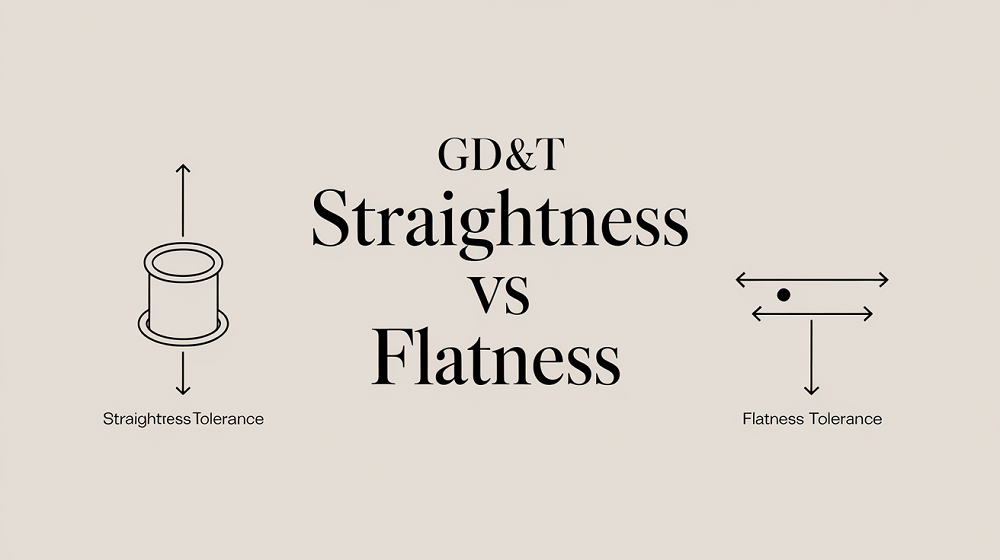 Straightness vs Flatness – Difference Between Flatness and Straightness
 GD&T Datum Definition, Feature, Symbol, Types, 3-2-1 Rule & Uses
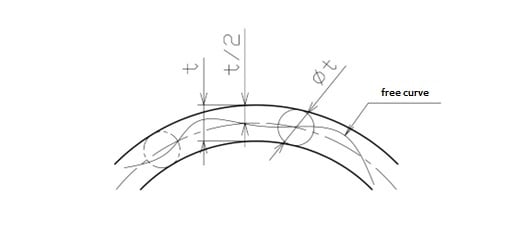 GD&T Profile Tolerance: Basic Knowledge, Types, Symbol, Calculation, Uses
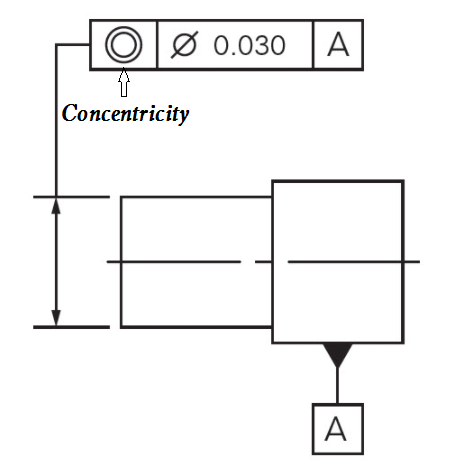 What is Concentricity in GD&T – How to Measure, Calculate Concentricity & Concentricity vs Runout
 GD&T Tolerance Definitions: 14 Different Tolerances Specific to GD&T Use