5 Axis Machining

Junying offers professional 5-axis CNC machining services, producing high-precision metal and plastic parts for various industries.
  • 5 Axis Machining vs 3+2 Machining
  • Tailored 5-axis precision CNC services
  • Quality-assured 5-axis CNC components
  • ISO 9001:2015, CE:SHBST100665461231
Relied on by

5-Axis CNC Machining Services for Complex Precision Parts

Advanced Multi-Axis Machining Solutions for Prototypes and Low-Volume Production

Complex parts are not difficult because they have more surfaces.

They are difficult because every additional setup introduces manufacturing risks:

  • Positioning variation
  • Datum transfer errors
  • Tool accessibility limitations
  • Surface quality inconsistency
  • Longer machining cycles

5-axis CNC machining helps manufacturers overcome these challenges by allowing the cutting tool to approach the workpiece from multiple directions with fewer setups.

The value of 5-axis machining is not simply having more machine axes.

The real value is:

Improved accessibility, reduced setup errors, and more consistent part quality.
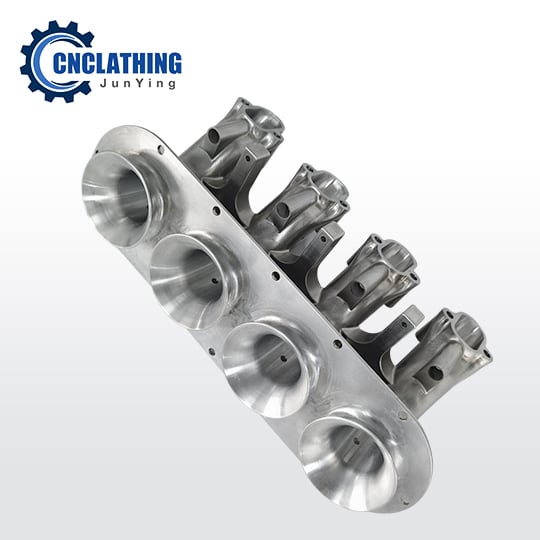
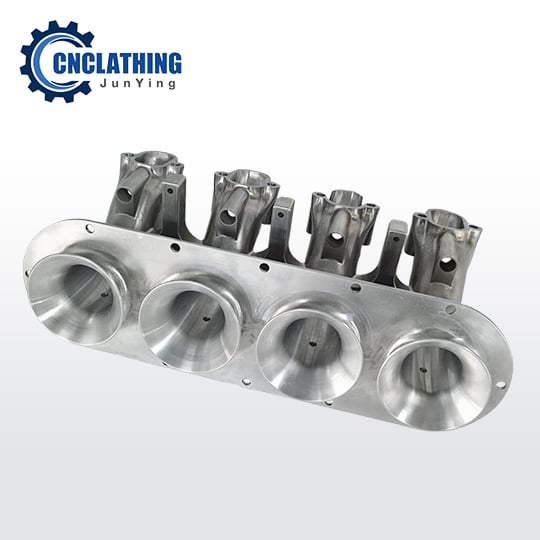
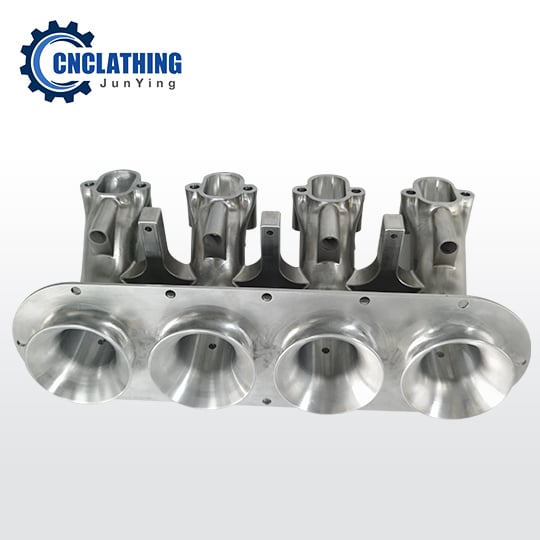
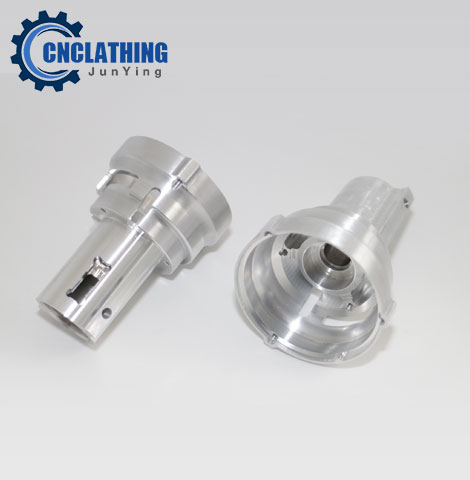
5 Axis CNC Machining Parts

What Is 5-Axis CNC Machining?

Unlike traditional 3-axis machining, which moves the cutting tool along three linear axes, 5-axis machining adds two rotational axes.

This allows the cutting tool and workpiece to move simultaneously, enabling machining from multiple angles in a single setup.

5-axis machining is commonly used for:

  • Complex geometries
  • Multi-sided components
  • Precision surfaces
  • Angled features
  • Parts requiring tight positional accuracy

Why Do Engineers Choose 5-Axis Machining?

1. Reduce Multiple Setups and Improve Part Accuracy

One of the biggest challenges in CNC machining is not cutting the material. It is repositioning the part.

Every additional setup creates potential variation:

  • Fixture repositioning error
  • Datum shift
  • Alignment issues

5-axis machining allows more features to be completed in fewer setups.

Benefits:

  • ✓ Reduced setup errors
  • ✓ Better feature-to-feature alignment
  • ✓ Improved positional accuracy
  • ✓ More consistent production results
2. Machine Complex Geometries That Are Difficult With Traditional Methods

Many engineered components include:

  • Compound angles
  • Curved surfaces
  • Deep cavities
  • Complex contours
  • Multiple machining faces

5-axis machining provides better tool orientation control.

This helps improve:

  • Surface finish
  • Tool accessibility
  • Machining efficiency
  • Dimensional stability
3. Improve Surface Quality on Complex Parts

For curved surfaces, traditional machining methods may require many tool passes.

This can create:

  • Visible tool marks
  • Uneven surface finish
  • Longer machining time

5-axis machining maintains optimized tool angles during cutting.

This helps achieve:

  • Smoother surface transitions
  • More consistent finishes
  • Better functional performance

Does Every Part Need 5-Axis Machining?

No.

A reliable machining partner should select the process based on engineering requirements. Not every complex part needs 5-axis machining.

Sometimes the Best Choice Is
  • 3-axis machining is sufficient
  • 3+2 machining is the better solution
  • Full simultaneous 5-axis machining provides the best result
The Correct Process Depends On
  • Part geometry
  • Tolerance requirements
  • Surface requirements
  • Production quantity
  • Cost objectives

5-Axis Machining Applications

5-axis machining is widely used across industries including:

Aerospace Components

Typical parts:

  • Structural components
  • Lightweight precision parts
  • Complex housings

Requirements:

  • Tight tolerance
  • Complex geometry
  • Material efficiency
Medical Equipment Components

Typical parts:

  • Precision mechanical components
  • Instrument parts
  • Custom devices

Requirements:

  • Repeatability
  • Surface quality
  • Dimensional accuracy
Automotive Components

Typical parts:

  • Performance components
  • Fixtures
  • Prototypes

Requirements:

  • Complex shapes
  • Fast development
  • Consistent production
Robotics and Automation Components

Typical parts:

  • Robot joints
  • End effectors
  • Custom mechanical structures

Requirements:

  • Assembly accuracy
  • Lightweight design
  • Complex geometry
Industrial Equipment

Typical parts:

  • Precision fixtures
  • Machine components
  • Custom tooling

Requirements:

  • Reliability
  • Repeatability
  • Functional performance

How Do We Ensure 5-Axis Machining Quality and Consistency?

A 5-axis machine does not automatically guarantee precision. Stable quality comes from controlling the complete manufacturing process.

1Engineering Review Before Machining

Before production, we analyze:

  • 3D CAD models
  • Technical drawings
  • Critical dimensions
  • GD&T requirements
  • Surface finish specifications
  • Material selection

Potential manufacturing risks are identified before machining begins.

2Machining Strategy Optimization

For complex components, machining strategy directly affects quality.

We evaluate:

  • Tool orientation
  • Cutting sequence
  • Fixture design
  • Tool accessibility
  • Material behavior

The goal:

Create a repeatable process, not just a successful first part.

3Fixture and Setup Control

Complex parts often fail because of unstable positioning.

We control:

  • Workholding method
  • Reference surfaces
  • Setup sequence
  • Part deformation risk

Reducing setup variation improves:

  • Accuracy
  • Repeatability
  • Production consistency
4Inspection and Quality Verification

Complex parts require more than basic dimensional checks.

Depending on project requirements, inspection may include:

  • Dimensional inspection
  • GD&T verification
  • CMM inspection
  • Surface finish measurement
  • First Article Inspection (FAI)

Quality reports can support engineering validation and production approval.

From Prototype to Low-Volume Production

Many engineering teams face the same challenge: The prototype works. But production reveals variation.

Our 5-axis machining services support:

Prototype Development

Helping engineers validate:

  • Design concepts
  • Functional performance
  • Assembly requirements
Low-Volume Manufacturing

Maintaining:

  • Process repeatability
  • Stable quality
  • Consistent output

Materials Supported for 5-Axis Machining

We machine a wide range of engineering materials:

Metals
  • Aluminum
  • Stainless Steel
  • Titanium
  • Brass
  • Copper
  • Tool Steel
  • Inconel
Engineering Plastics
  • PEEK
  • Nylon
  • Delrin
  • PTFE
Material Selection Depends On
  • Strength requirements
  • Weight requirements
  • Environmental conditions
  • Machining characteristics

When Should You Choose 5-Axis CNC Machining?

5-axis machining may be the right solution when your project requires:

Complex 3D geometry
Multiple angled surfaces
Reduced machining setups
Tight positional tolerances
Improved surface quality
Prototype-to-production support

Send your CAD file and drawings.

Our engineers can review:

  • Whether 5-axis machining is necessary
  • The best manufacturing approach
  • Potential cost optimization opportunities

Engineering review before quotation.

Frequently Asked Questions

Is 5-axis machining more accurate than 3-axis machining? +
Not always. The advantage of 5-axis machining is often reducing setups and improving tool accessibility, which can improve consistency for complex parts.
Is 5-axis CNC machining more expensive? +
Usually, yes. However, reduced setups, improved efficiency, and better process stability can make it more cost-effective for complex components.
Can 5-axis machining support low-volume production? +
Yes. 5-axis machining is especially valuable for prototypes, customized parts, and low-volume production where flexibility and repeatability are important.

Start Your 5-Axis CNC Machining Project

Looking for a trusted 5-axis CNC machining partner?

Upload your CAD file, 2D drawing, or technical requirements for a fast engineering review.

Our engineers will help you with:

✓ 5-Axis Feasibility Analysis ✓ Material Selection Advice ✓ Tolerance & Surface Review ✓ Cost Optimization Suggestions ✓ Prototype-to-Production Support

Get in touch today and turn your complex designs into precision-machined parts.

Request a Free Quote →

5 Axis CNC Machining Services – Precision CNC Manufacturing Company with 5 Axis Machining Center

As an experienced and professional machine shop specialized in CNC manufacturing for many years, Junying (CNCLATHING.COM) is capable of precision 5 axis CNC machining services and 5 axis milling. Whether you are in need of high-quality and precise metal or plastic components, we can provide 5 axis machining parts to worldwide clients for a variety of industries including automotive, medical, military, aerospace, mechanical, machine tool, high-tech, and more, with excellent machining and programming skills, as well as 5 axis CNC machining center. Our engineers and machinists can perform true 5 axis machining services work and produce five axis machining parts with ease. No matter how complex the CNC machining parts, each step will be executed with a rigorous attitude, to deliver exceptional 5 axis machining components that demonstrate the highest quality standards. Even though any problems during the process, we’ll keep running the job and make adjustments until all the issues are addressed. If you require a well-established and cost-effective CNC machining company to take over your project, Junying can achieve your expectation.

5 Axis Machining vs 3+2 Machining

Understanding 5-Axis CNC and 3+2 Axis Machining

In modern multi-axis CNC machining, understanding the distinction between 5-axis machining and 3+2 axis machining is crucial for engineering, manufacturing, and cost-effective production planning.

5-Axis CNC Machining:
5-axis CNC allows the cutting tool or workpiece to move simultaneously along three linear axes (X, Y, Z) and two rotational axes (A, B). This continuous movement enables:

  • Cutting complex geometries, deep cavities, and angled surfaces
  • Minimizing setups and workpiece repositioning
  • Achieving higher precision and superior surface finishes

3+2 Axis Machining (Positional Machining):
3+2 axis machining involves rotating the workpiece along two axes and then performing 3-axis linear machining. This is a discrete positioning process: each rotational adjustment requires the tool to complete a 3-axis program before moving to the next orientation.

While effective for simple inclined faces or multi-face components, it cannot perform continuous complex surface machining, and may result in lower efficiency and precision for intricate parts.

Side-by-Side Comparison

Feature 5-Axis CNC Machining 3+2 Axis Machining
Tool Movement Continuous simultaneous movement along 5 axes Discrete movement; rotational axes positioned, then 3-axis cutting
Suitable Part Geometry Complex curves, deep cavities, angled and contoured surfaces Simple angled surfaces, flat faces, moderate complexity
Accuracy High precision due to minimal repositioning Moderate precision; requires multiple setups
Surface Finish Superior surface quality Dependent on multiple setups and orientations
Setup Time Reduced setups due to multi-axis capability More setups required for multiple orientations
Ideal Applications Aerospace components, medical implants, complex molds, high-precision parts Inclined holes, chamfers, multi-face panels with less geometric complexity

Practical Applications and Considerations

Selecting between 5-axis CNC and 3+2 axis machining depends on part complexity, precision requirements, and production efficiency:

  • 5-axis CNC is ideal for industries and applications requiring high-precision, complex geometries, such as:
    • Aerospace turbine blades and structural components
    • Medical implants and surgical instruments
    • Advanced mold making with multi-curved surfaces
  • 3+2 axis machining is sufficient for less complex tasks, where angled surfaces or multiple planar faces are needed without continuous complex contouring. It is often more cost-effective for medium-complexity parts.

Understanding these differences ensures that manufacturers choose the most suitable machining strategy, balancing precision, efficiency, and cost, while leveraging the full capabilities of multi-axis CNC machining.

Materials for 5 Axis CNC Machining

Extensive experiences and outstanding capabilities enable us to manufacture 5-axis machined parts from various materials whether you need metal or plastic precision CNC parts. Please check out our material chart for 5-axis CNC machining. If there are no materials you want, contact us to talk about your requirements.

Materials Common Options Features
Aluminum

Al6061

Al7075

Lightweight, strong, corrosion resistance, good thermal conductivity, easy to machine.
Titanium Ti-6Al-4V High strength-to-weight ratio, corrosion resistance, and biocompatibility
Stainless Steel 316L Good corrosion resistance and durability
Copper Alloys Brass and bronze Electrical and thermal conductivity, ease of cutting
Plastics PMMA, Polycarbonate Versatility, impact resistance, and ease of machining

Surface Finishes for 5 Axis CNC Machining

To achieve the best surface finish on our 5 axis machining parts, a variety of post-processing and surface finishing techniques can be applied.

Surface Finish Description
Bead blasting Small glass beads or other abrasive materials are blasted at the surface of the part to remove burrs and create a uniform and matte finish.
Black oxide coating Immerse the part in a hot oxidizing salt bath to create a black protective layer.
Passivation Treat the part with an acid solution to remove any surface iron and create a protective oxide layer.
Electropolishing Remove a thin layer of material to get a smooth and shiny surface.
Etching Remove a thin layer from the surface to create a textured or patterned surface.
Anodizing Create a protective oxide layer on the surface of a part to improve its resistance to corrosion, wear, and scratches.

Applications & Industries of 5-Axis Machining

5-axis machining services are versatile to produce complex and precise components for a bunch of industries and applications.
  • Automotive: engine parts, transmissions, and suspension systems.
  • Aerospace: turbine blades, engine parts, and structural components.
  • Medical: implants, surgical instruments, and diagnostic equipment.
  • Tool and die making: molds, dies, and other tooling components with complex geometries.
  • Defense: weapons systems, vehicles, and aircraft.
  • Industrial automation: robotics, conveyors, and machine tools.
  • Architecture and art: sculptures, molds, and complex decorative elements.

Why Choose Junying 5 Axis CNC Machining Services

  • Our 5 axis vertical machining center equipped with multiple position tool changers, there is no need for setup on different machinery, allows 5 axis machining of complex parts with high efficiency, saving time and cost.
  • 5 axis CNC service at Junying has strong capabilities to deliver precision machining products based on the demands and custom design given by clients, to reach or exceed your expectation.
  • We can machine precision CNC products with a 3/4/5 axis machining center from a host of materials, including aluminum, steel, copper, bronze, titanium, and more, to fill different specifications.
  • A complete process and quality control system in place to assess quality at every stage of our preparation, manufacturing, and inspection, to ensure the quality of 5 axis CNC machining components consistently meet the requirements.
  • A series of secondary processing and finishing services are offered for further processing, including 3/4 axis machining & milling, painting, sandblasting, anodizing, passivation, chrome plating, nickel plating, and more.
  • Custom 5 axis milling parts with competitive prices, fast turnaround, improved productivity, and on-time delivery.

What is 5 Axis Machining?

The 3, 4, or 5 axis machining is defined related to the number of directions in which the cutting tool can move, this also determines the ability of a CNC machine to move a workpiece and a tool. 3-axis machining centers can move a component in X and Y directions and the tool moves up and down along Z-axis, while on the 5 axis machining center, the tool can move across the X, Y and Z linear axes as well as rotates on the A and B axes, which makes the cutter can approach the workpiece from any direction and any angle. 5 axis machining is different from 5-sided machining. Therefore, 5 axis CNC machining services allow infinite possibilities of the machined parts. Hook surface machining, unusual shape machining, hollow machining, punching, oblique cutting, and more special processes can be done with 5 axis CNC service.

Benefits of 5 Axis Machining

  • The 5 axis machining parts can be finished on a single 5 axis machine, which reduces fixture and setup preparation, saves a lot of time
  • Complex geometries can be processed with ease, high productivity and efficiency can be guaranteed at the same time
  • Excellent surface finishes can be achieved, improves the overall quality of 5 axis CNC parts
  • Expanded capabilities, higher accuracy, boosted throughput, and shortened lead time
  • Improved cutting conditions, maintain the optimal cutting, and reduce damage to the tool
5 Axis CNC Machining Services
5-Axis CNC Machining FAQs
1.How Does 5-Axis CNC Machining Work?

A 5-axis CNC machine utilizes programmed instructions to control the movement of the cutting tool and workpiece, the machining process starts with creating a 3D CAD model of the required parts, then it is exported into CAM software to get a G-code, which guides the operation of the machine. The G-code will contain tool paths that are generated according to the part geometry, the cutting tool will move along linear axes, and the worktable along rotational axes, 5 faces of a workpiece can be made in one setup.

2.What Is the Process of 5 Axis CNC Machining

Design and programming: the first step involves designing a part or component using CAD software and then translating it into a CAM program that generates the tool path to be used.

Material preparation: select the right material and make it prepared for machining, including cutting it into a roughly required shape and cleaning it.

Set-up: securely mount the material onto the machine bed or fixture and load the cutting tool into the spindle. The 5-axis machine should be programmed with the tool paths and machining parameters.

Machining: start the machine, and set the spindle rotates at high speeds and the cutting tool moves along the programmed tool path, cutting away material to create the part.

Inspection: when the 5-axis machining is completed, inspect the dimensions, surface finish and other specifications of the part using various instruments.

3.Types of 5-Axis CNC Machines

Based on the movement of the spindle head and worktable, the 5-axis CNC machines can be classified into three major types.

– Head/Head 5-axis machines: the rotational axes are located in the head, this type of 5-axis machine configuration is more suitable for producing large and heavy parts.

– Head/Table 5-axis machines: one rotational axis in the head and another one in the rotary table, the revolving of the axis in the head is restricted and the rotary shaft in the table has a wider range. The rotation of the workpiece has no limit and the number of parts it can manufacture is limited.

– Table/Table 5-axis machines: both the rotary axes are located in the table, and the head does not move. This type of configuration is ideal for producing undercuts and less for large or heavy parts.

4. What Are Axes in 5-Axis Machines?

In 5-axis CNC machining, there are five axes of motion that the cutting tool can move along. These are typically labeled with letters A, B, C, X, and Y, although the specific labels may vary depending on the machine manufacturer and software used.

  • X-axis: This axis refers to the horizontal movement of the cutting tool along the length of the workpiece.
  • Y-axis: This axis refers to the horizontal movement of the cutting tool along the width of the workpiece.
  • Z-axis: This axis refers to the vertical movement of the cutting tool up and down along the height of the workpiece.
  • A-axis: This axis refers to the rotation of the cutting tool around the X-axis. This is sometimes referred to as the “tilt” axis.
  • B-axis: This axis refers to the rotation of the cutting tool around the Y-axis. This is sometimes referred to as the “swivel” axis.
5. 3-Axis vs 5-Axis CNC Machining, What Are the Differences?

– Number of axes: 3-axis CNC machines have movement in three axes (X, Y, and Z), while 5-axis CNC machines can move in five axes (X, Y, Z, A, and B). This additional degree of freedom allows for more complex and precise cuts.

– Flexibility: 5-axis CNC machining offers greater flexibility than 3-axis because they can approach the workpiece from any angle and can machine complex geometries in a single setup. This reduces the need for multiple setups and improves accuracy.

– Efficiency: 5-axis machining centers are usually more efficient than 3-axis machines for machining complex parts. With 5-axis machines, multiple operations can be performed simultaneously, reducing the machining time and increasing productivity.

– Precision: 5-axis CNC service can produce parts with higher precision and accuracy than 3-axis machines. The additional axes of motion allow for more precise control over the cutting tool and the workpiece, resulting in tighter tolerances and smoother surface finishes.

– Cost: 5-axis CNC machining is generally more expensive than 3-axis due to their added capabilities and complexity.