
Metal Heat Treatment Basics & Guide – Stages and Types
Best Heat Treatment Services for Metals & Alloys
CNCLATHING.COM (Junying Metal Manufacturing Co., Limited) offers various heat treatment services for your machined parts and metals to achieve the required properties and performance, including basic heat treating processes (annealing, quenching, tempering, normalizing) and their subtypes or additional techniques. From aerospace to automotive to other industries, our state-of-the-art facilities and experienced experts will deliver precise results to meet your exact specifications. If you are not sure which process to choose, please contact us. Cost-effective and high-quality metal heat treatment services will be provided.
What Is Heat Treatment?
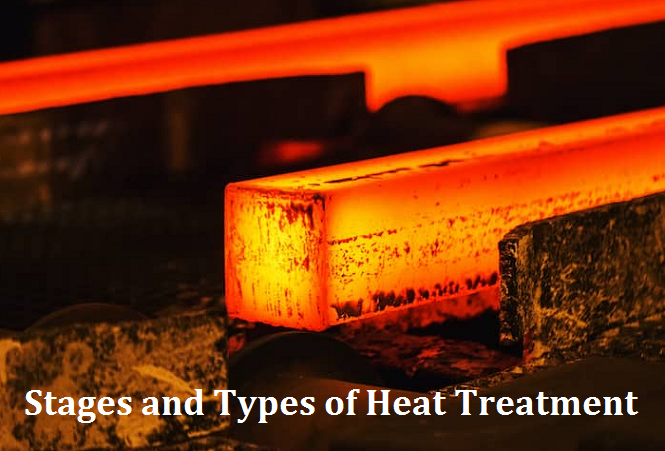
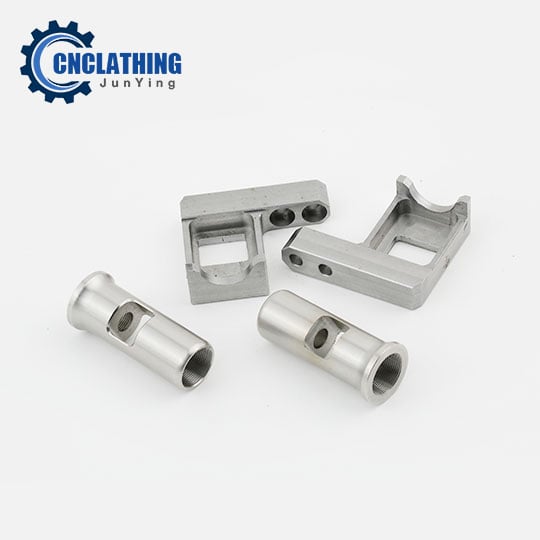
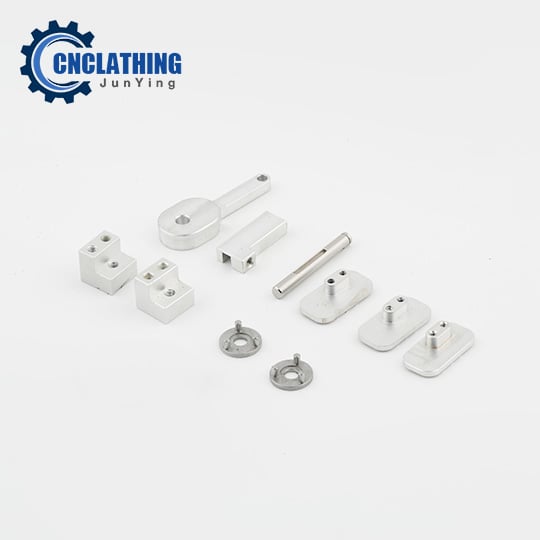
Heat treatment is a process that heats, cools or holds the temperature to alter the internal structure of a material so as to adjust its mechanical properties and performance. Different metal CNC machined parts can undergo specific heat treatment processes based on the functional requirements. After heat treating, the surface appearance of metals may not show obvious changes, but the internal grain structure is significantly different, which affects its hardness, toughness, corrosion resistance, wear resistance and more.
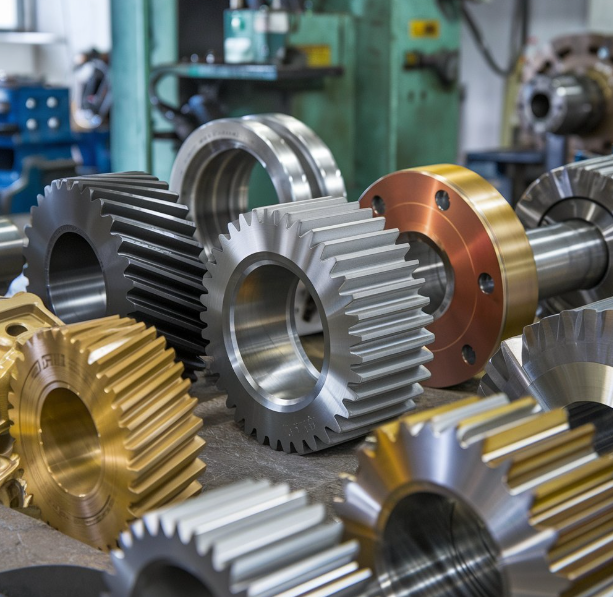
For example, mechanical parts such as gears and rails are heat treated to increase strength and durability. Springs and automotive suspension components are heat treated to enhance toughness and elasticity. Raw materials can also be softened by heat treatment process to facilitate easier machining.
How Does Heat Treatment Work?
What does heat treatment do to metals? The fundamental structure of metals is a polycrystalline arrangement, where each crystal is called a grain, and the interface between grains is known as the grain boundary. Grain boundaries hinder atomic dislocation; the finer the grains (more grain boundaries), the harder the metal; conversely, larger grains make the metal softer.
By heating the metal to a temperature where atoms can rearrange and then controlling the cooling rate, the grain size can be adjusted. Slow cooling allows grains to grow larger, softening the metal and relieving internal stresses (annealing). Rapid cooling produces finer grains and a denser structure, hardening the metal (quenching).
4 Common & Basic Types of Heat Treatment Processes
Chemical Heat Treatment Process
Chemical heat treatment is a process where metal workpieces are heated in an active medium containing specific elements, causing these elements to diffuse into the metal’s surface. This alters the surface chemical composition and microstructure, thereby enhancing surface properties such as hardness, wear resistance, corrosion resistance, and fatigue strength while preserving the ductility and toughness of the core material. Common chemical heat treatment methods include carburizing/carburising, nitriding, carbonitriding, and boronizing.
Basic heat treatment mainly alters the microstructure of metals, without changing their chemical composition. In contrast, chemical heat treatment modifies not only the microstructure but also the chemical composition of the metal surface by diffusing elements into it.
Carburizing
Carburising/Carburizing is a process where carbon atoms are diffused into the surface of low-carbon steel at high temperatures (typically 850-1050℃), creating a carbon-rich layer. This surface is then hardened by quenching, resulting in high surface hardness and wear resistance. It requires subsequent quenching and tempering, and the carburised layer is relatively thick (0.5-2 mm).
Nitriding
Nitriding involves diffusing nitrogen atoms into medium-carbon alloy steel at lower temperatures compared to carburizing, around 500 to 550 °C, forming a hard nitride layer with ultra-high surface hardness. Nitriding typically does not require quenching, produces a thinner hardened layer (up to 0.6 mm), and causes minimal distortion, making it suitable for parts requiring tight dimensional tolerances.
Carburizing vs Nitriding, Which One to Choose?
Carburising operates at higher temperatures, suits low-carbon steels, produces a thicker hardened layer, and requires quenching and tempering. It offers superior impact resistance and load-bearing capacity but causes greater distortion. Nitriding occurs at lower temperatures, is applicable to medium-carbon alloy steels, results in a thinner hardened layer, generally requires no quenching, causes minimal distortion, and yields higher surface hardness but lower impact resistance.
Classification of Main Heat Treatment Processes
| Types of Annealing | Key Features | Typical Applications |
|---|---|---|
| Full Annealing | Heating above Ac₃ +30~50℃, furnace cooling to ~550℃; refines grains and softens metal structure. | Medium carbon steels, castings, and forgings for grain refinement and hardness reduction. |
| Spheroidizing Annealing | Heating near Ac₁ to spheroidize cementite improves machinability. | Eutectoid and hypereutectoid steels before machining. |
| Stress Relieving | Heating below Ac₁ (500-650℃), no phase change; relieves residual stresses. | Weldments and machined parts to relieve residual stress. |
| Isothermal Annealing | Austenitized, then rapidly cooled to the pearlite region for isothermal transformation, shortens the process cycle and produces a uniform microstructure. | Parts requiring shorter cycle times and uniform structures. |
| Homogenizing Annealing | Heating at 1000-1200℃ for long durations to eliminate dendritic segregation. | Castings requiring chemical homogenization. |
| Partial Annealing | Heating between Ac₁ and Ac₃ for partial austenitization; softens tool steels and low alloy steels. | Softening and microstructure adjustment of tool steels and low alloy steels. |
| Types of Quenching | Key Features | Typical Applications |
|---|---|---|
| Direct Quenching | Cooling in a single medium (water, oil, or quenching fluid); simple and economical. | Hardening of simple parts. |
| Interrupted Quenching | Water quenching followed by slow oil quenching to reduce cracking risks. | Prevent cracking in complex parts. |
| Martempering | Isothermal soaking above Ms point to reduce distortion; suitable for precision tools. | Hardening tools with controlled distortion. |
| Austempering | Isothermal transformation in the bainite region for balanced mechanical properties. | Medium to high carbon steels need balanced hardness and toughness. |
| Surface Hardening | Rapid surface heating and quenching to harden the surface while maintaining a tough core. | Gears, shafts through induction, flame, or laser hardening. |
| Cryogenic Treatment | Post-quench cooling below -80℃ to reduce retained austenite and improve dimensional stability. | Precision gauges, bearings. |
| Types of Tempering | Key Features | Typical Applications |
|---|---|---|
| Low-Temperature Tempering | Tempering at 150-250℃ produces tempered martensite with high hardness. | Cutting tools, gauges (58-62 HRC). |
| Medium-Temperature Tempering | Tempering at 350-500℃ produces tempered troostite with good elasticity and moderate hardness. | Springs and elastic components (40-48 HRC). |
| High-Temperature Tempering | Tempering at 500-650℃ produces tempered sorbite with excellent toughness and balanced mechanical properties. | Shafts, connecting rods (quench and temper treatment). |
| Multiple Tempering | Two to three tempering cycles for high alloy steels to relieve residual stresses and improve properties. | W18Cr4V high-speed steel. |
| Aging Treatment | Low temperature (100-150℃), long duration holding to stabilize dimensions and mechanical properties. | Precision parts require dimensional stability. |
| Types of Normalizing | Key Features | Typical Applications |
|---|---|---|
| Conventional Normalizing | Heating 30-50℃ above Ac₃/Accm, air cooling; refines grains and homogenizes microstructure. | Low-carbon steels pre-treatment to improve machinability. |
| Isothermal Normalizing | Air cooling to near Ar₁ temperature for isothermal transformation produces uniform microstructure. | Gears, connecting rods require a uniform structure. |
| Two-Stage Normalizing | Two-step normalizing heat treatment to eliminate coarse grains and refine microstructure. | Superheated steels with coarse grain structure. |
Types of Heat Treatment Materials – What Metals Can Be Heat-Treated?
Heat treatment fundamentally relies on solid-state phase transformations or precipitation hardening mechanisms to alter a material’s microstructure without melting. Therefore, not all materials can benefit from heat treatment. The core requirement for a material to be heat treatable is that it must exhibit some form of phase change or solubility variation within the solid state. This could be a polymorphic transformation (e.g., ferrite to austenite in steels), a significant change in solubility of alloying elements (e.g., copper in aluminum alloys), or ordering-disordering transitions in certain alloys.
While steel is an undisputed mainstream material for heat treatment because of its well-defined iron-carbon phase diagram and extensive phase transformations, many non-ferrous alloys, such as aluminum, titanium, copper, magnesium, and nickel-based alloys, also respond well to heat treatment, primarily through solution treatment followed by aging. Some special materials, including hard metals and precious metals, have tailored heat treatment processes aimed at relieving stresses or optimizing specific properties.
Materials that lack solid-state phase transformations or meaningful solubility changes, such as pure metals, certain aluminum alloys, plastics, rubbers, and ceramics, can’t effectively undergo traditional heat treatment. For these, heating processes serve different purposes (stress relief, softening, or sintering) but do not involve classical metallurgical phase changes.
Heat Treatment Materials List
| Material Type | Applicable Heat Treatment Processes | Typical Applications |
|---|---|---|
| Ferrous Alloys (Iron-based) | Annealing, Normalizing, Quenching, Tempering, Surface Hardening, Chemical Heat Treatment | 90% of mechanical parts, engine components, and structural steels |
| Carbon & Alloy Steels | Annealing, Normalizing, Quenching, Tempering, Surface Hardening, Chemical Treatments | Shafts, gears, machine parts |
| Cast Irons | Annealing, Normalizing, Surface Hardening, Isothermal Quenching | Engine blocks, crankshafts |
| Stainless Steels | Solution Treatment, Stabilizing, Quenching + Tempering | Cutlery, chemical equipment |
| Non-Ferrous Alloys | Solution Treatment + Aging (Artificial/Natural), Annealing, Stress Relieving | Aerospace, automotive, medical implants |
| Aluminum Alloys | Solution Treatment + Aging | Aircraft skins, automotive wheels |
| Titanium Alloys | Annealing, Solution Treatment + Aging, Stress Relieving | Aero-engine blades, medical implants |
| Copper Alloys | Solution Treatment + Aging, Annealing | Elastic components, connectors |
| Magnesium Alloys | Solution Treatment + Aging, Annealing | Aircraft seats, automotive dashboards |
| Nickel-based Alloys | Solution Treatment + Aging, Annealing | Turbine blades, nuclear power equipment |
| Special Materials | ||
| Hardmetals (Cemented Carbides) | Post-sintering Heat Treatments | Cutting tools, wear parts |
| Precious Metals | Annealing, Aging | Jewelry, electronics |
| Non-metallic Materials | “Annealing,” “Quenching” (conceptual) | Glass, polymers |
FAQs
Difference Between Annealing and Normalizing
The fundamental difference between annealing and normalizing lies in their cooling methods, which cause differences in microstructure and mechanical properties, thereby defining their distinct application scenarios.
| Difference | Annealing | Normalizing |
|---|---|---|
| Heating Temperature | About 30~50℃ above Ac₃ or Ac₁ | About 30~50℃ above Ac₃ or Accm (usually 20-30℃ higher than annealing) |
| Cooling Method | Furnace cooling (slow cooling inside furnace until ~550℃, then removed) | Air cooling (natural cooling in open air) |
| Cooling Rate | Slow (10-100℃ per hour) | Faster (approximately 2-5 times furnace cooling speed) |
| Resulting Microstructure | Coarse pearlite (thick ferrite + cementite lamellae) | Fine pearlite (sorbite) with finer lamellar spacing |
| Hardness & Strength | Lower hardness and strength (e.g., ~170-200 HB for 45 steel) | Higher hardness and strength (e.g., ~200-250 HB for 45 steel) |
| Ductility & Toughness | Better plasticity and toughness | Slightly reduced plasticity and toughness |
| Production Time | Longer (several hours to tens of hours) | Shorter (typically several tens of minutes) |
| Cost | Higher due to longer furnace occupancy | Lower, parts can be removed immediately after heating |
| Typical Application |
Required extremely low hardness to improve machinability; large or complex parts needing minimal distortion and residual stress |
Medium hardness balancing strength and machinability; low carbon steels; preparing microstructure for quenching |
Difference Between Annealing and Tempering
Annealing and tempering differ fundamentally in process position, heating temperature, microstructural changes, and purpose: annealing is a preparatory heat treatment often involving phase changes, whereas tempering is a post-quenching treatment performed below the critical temperature to modify martensitic microstructure without phase transformation.
| Difference | Annealing | Tempering |
|---|---|---|
| Process Position | Pre-treatment (before or after rough machining) | Final heat treatment (after quenching, before finishing) |
| Preceding Process | Casting, forging, rolling, welding | Must be preceded by quenching (no quench = no temper) |
| Heating Temperature | Above or below Ac₁ or Ac₃ (can be >727℃) | Always below Ac₁ (<727℃), no phase change |
| Microstructural Change | Possible phase transformation (e.g., full austenitization) | No phase change; martensite decomposes |
| Core Purpose | Soften material, refine grains, improve machinability | Reduce brittleness, adjust hardness, relieve quenching stresses |
| Hardness Trend | Decrease hardness (softening) | Reduce quenched hardness (very hard → medium hard) |
| Independent Usage | Can be used alone | Cannot be used without prior quenching |
| Typical Process Flow | Raw material/blanks → Annealing → Machining → Quenching → Tempering → Final product | Quenched part → Tempering → Final product |
Applications of Heat Treatment
Our heat treatment services are utilized across a diverse range of industries to improve the performance, longevity, and reliability of metal components. Below are some key industries we serve:
- Aerospace – We provide heat treatment services for flight-critical components such as gears, shafts, and landing gear parts. Our treatments ensure optimal strength, fatigue resistance, and safety for aerospace applications, including turbines and fasteners, where component reliability is paramount.
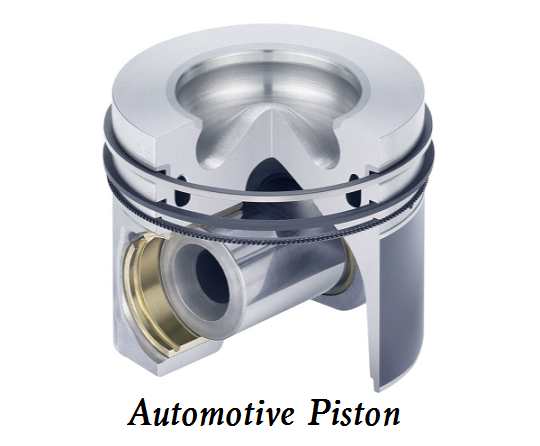
- Automotive – Our heat treatments enhance the wear resistance, strength, and durability of parts like gears, axles, engine components, and transmission parts. We deliver high-quality solutions for carburized gears, induction-hardened crankshafts, and other powertrain components subjected to extreme contact stresses.
- Construction – Heat treatment processes like normalizing and quenching & tempering (Q&T) improve the strength and toughness of structural steel and heavy machinery components. Selective surface hardening techniques are applied to high-wear parts such as earth-moving equipment pins and hydraulic cylinder rods.
- Military – We provide heat treatment solutions for armor, weapons, and military vehicles, ensuring that critical components are strong, durable, and able to withstand extreme conditions. Processes like quenching & tempering, surface hardening, and stress relieving are commonly used for military hardware and defense equipment.
- Energy (Oil & Gas) – Our heat treatment services improve the performance of critical components used in the oil & gas sector, including drill bits, valves, and downhole tools. Stress relieving, quenching & tempering, and surface hardening techniques like carburizing and induction hardening are widely used to enhance wear resistance and durability of equipment operating in harsh environments.
- Electronics – In the electronics industry, heat treatment processes like annealing and stress relieving improve the formability, dimensional stability, and bonding properties of copper and aluminum components. Precipitation hardening is selectively applied to aluminum alloy housings and brackets to enhance strength without compromising lightweight design.
- Medical Devices – We offer precise heat treatments for medical instruments and implants, ensuring they meet stringent industry standards. Processes like annealing, quenching & tempering, and vacuum heat treatment improve the corrosion resistance, strength, and biocompatibility of materials used in surgical tools, implants, and diagnostic equipment.
- Industrial & Heavy Equipment – For heavy machinery and industrial applications, we offer heat treatments that improve the load-bearing capacity and fatigue resistance of large components like gearbox housings, crane shafts, and rolling mill bearings, ensuring reliable performance under extreme mechanical loads.
- Rail – Our heat treatment services extend the service life and wear resistance of rail components such as bearing assemblies, diesel engine crankshafts, and rail clips. Specialized surface hardening processes combat contact fatigue and abrasive wear in this demanding environment.
- Tool & Die – We specialize in advanced heat treatments for tool and die applications, including vacuum hardening, deep cryogenic treatment, and nitriding/carburizing. These processes ensure that extrusion dies, stamping tools, and welding fixtures maintain optimal hardness uniformity, wear resistance, and dimensional stability throughout their service life.
Why Choose Our Heat Treatment Services?
At CNCLATHING.COM, our comprehensive heat treatment capabilities enable us to manage your parts from start to finish. This integrated process reduces supply chain complexity, ensures consistent, high-quality results, and accelerates your project timelines.
Key Advantages of Our Heat Treatment Services:- Customized Heat Treatment Solutions: Every heat treatment cycle is tailored to your exact material and component specifications, ensuring optimal mechanical properties and performance aligned with your application needs.
- Enhanced Mechanical Properties: Our advanced heat treatments improve strength, wear resistance, and toughness, enabling your components to perform reliably under demanding stresses and harsh conditions.
- Extended Component Lifespan: By reducing residual stresses, minimizing wear, and controlling dimensional stability, our processes prolong component life and reduce maintenance costs.
- Integrated Quality Control and Traceability: We implement rigorous quality assurance throughout the process, with real-time monitoring and data-driven insights to guarantee full conformance to your specifications.
- Proven Industry Experience: Serving aerospace, automotive, and heavy machinery sectors, we have decades of expertise handling complex parts and challenging materials with precision and reliability.
Choosing CNCLATHING.COM means partnering with a heat treatment provider who combines technical excellence, customized flexibility, and a steadfast commitment to your project’s success.