In modern life, you can find titanium products widely used in various fields, such as airplane components. What characteristics does titanium alloy have? What are the different types of titanium alloys? Follow us to go over the types and properties of titanium in this article.In modern life, titanium products are widely used in various fields, such as airplane components. What characteristics does titanium alloy have? What are the different types of titanium alloys? Follow us to go over the types and properties of titanium in this article.
What is Titanium Alloy? - Titanium Properties
Titanium alloys are engineered materials made by combining titanium with elements such as aluminum, vanadium, or molybdenum to improve strength, corrosion resistance, and temperature performance.They are widely used in:
Aerospace components
Medical implants
CNC machined precision parts
The key difference between alloy types lies in their microstructure and phase composition.
Quick Comparison of Titanium Alloy Types
Type
Strength
Heat Resistance
Typical Applications
Machinability
Alpha
Medium
Excellent
Aerospace, high-temp parts
Good
Beta
Very High
Low
Springs, high-strength parts
Poor
Alpha-Beta
Balanced
Medium
CNC parts, aerospace, medical
Medium
If you’re unsure → choose Alpha-Beta (Ti-6Al-4V)
Alpha vs Beta vs Alpha-Beta Titanium
Alpha Titanium Alloys
Key characteristics are excellent corrosion resistance. Strong performance at high temperatures. Non-heat treatable. Good weldability.
Best for Aerospace structures. Elevated temperature environments. The limitation is lower strength compared to other types.
Beta Titanium Alloys
Key characteristics are highest strength among titanium alloys. Heat treatable. Excellent formability. Best for high-strength components. Springs and fasteners. Not ideal for high-temperature environments. CNC machining (tool wear is high).
Alpha-Beta Titanium Alloys
Key characteristics are balanced strength and ductility. Heat treatable. Moderate machinability. Best for general engineering, CNC machining and aerospace & medical parts.
How to Choose the Right Titanium Alloy?
Use this quick selection guide. Need high temperature resistance→ choose Alpha .Need maximum strength→ choose Beta. Need balanced performance (recommended)→ choose Alpha-Beta. For CNC machining, Alpha-Beta alloys are the safest and most cost-effective choice. Beta alloys increase machining cost significantly.
Machinability of Titanium Alloys
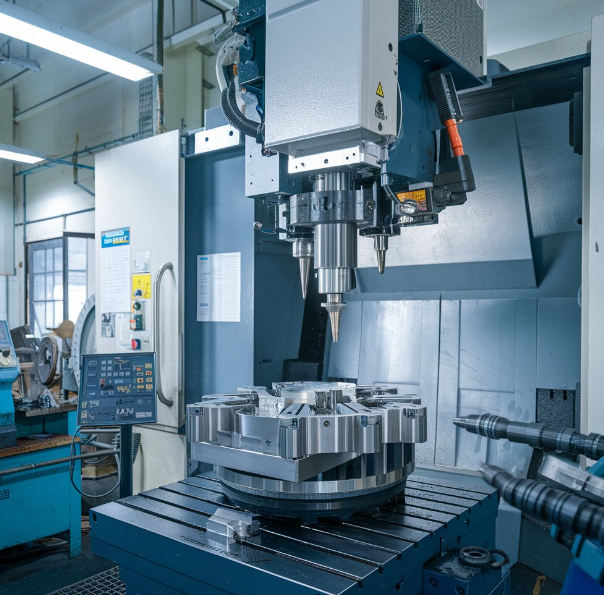
Machining titanium is challenging due to low thermal conductivity, high chemical reactivity and tool wear.
Ti-6Al-4V is the most widely used titanium alloy. It has excellent strength-to-weight ratio. Good corrosion resistance. Suitable for CNC machining.
Typical applications are Aerospace components, medical implants and precision machined parts. In real-world CNC projects, this is the default titanium material.
Applications of Titanium Alloy Types
Aerospace
Alpha & Alpha-Beta alloys for structural parts
Medical
Alpha-Beta alloys for implants and surgical devices
Industrial & CNC Machining
Alpha-Beta alloys dominate due to balanced properties
When NOT to Use Certain Titanium Alloys
Avoid Beta titanium when high temperature stability is required. Machining cost is a concern. Avoid Alpha when high strength is critical. Choosing the wrong alloy can increase cost without improving performance.
Titanium vs Other Metals
Material
Strength
Weight
Machinability
Titanium
High
Light
Difficult
Aluminum
Medium
Very light
Easy
Steel
Very high
Heavy
Medium
Titanium offers the best strength-to-weight ratio, but at higher cost.
FAQ
What is the most common titanium alloy?
Ti-6Al-4V (Alpha-Beta type).
Which titanium alloy is strongest?
Beta titanium alloys.
Which titanium alloy is best for CNC machining?
Alpha-Beta alloys (especially Ti-6Al-4V).
Is titanium difficult to machine?
Yes, especially Beta alloys due to tool wear and heat concentration.